About Me
I think, between lines of biting social satire, it was Eric Idle who once suggested keeping your eye on the brighter side of life.
It's not a bad idea. My bright side is twenty years (and counting) in one of the best professions anyone could ask for.
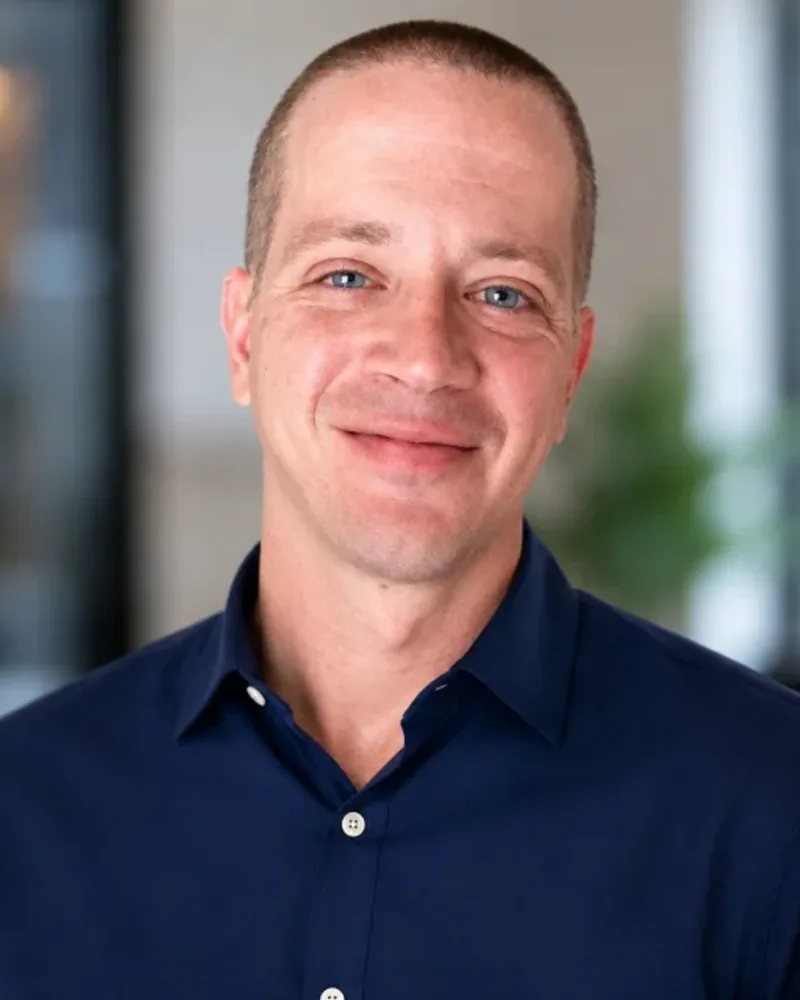
20 years and still growing
It's hard to point to an exact moment when I decided to do this for a living. In the '80s, my father hauled around a camcorder the size of a small dog, and I loved helping him film my siblings playing sports or record updates on his latest home project to mail to his brother in California. By the '90s, I was flexing my own production skills, making dozens of videos for school projects, sadly none of which survived into the digital age.
When I graduated high school and left for Ohio University in the 2000s, I had no idea what world of possibilities was waiting for me. As the decade rolled on, the technology around me kept evolving just as fast as I did. Today, I don't know exactly what young Tyler would say about where I ended up, but I know he'd have plenty of ideas.
The stories told
My first professional job in production was as a cable page and occasional camera operator at Ohio State University football games. I was 17, still in high school and surrounded by 100,000 people. There’s no better place to learn the impact of video on an audience than standing in a stadium full of fans cheering at the replay of the touchdown you just filmed.
After college I reconnected with the manager of the football media team, now managing the video rental team at LIVE! Technologies. I joined the video department and for the next several years traveled around Columbus and the United States with truckloads of video and other event equipment, arriving at rented event halls or auditoriums and assembling video systems that ranged from a laptop and a projection screen to a full stadium ready for thousands of attendees. The first event I ever did was setting up a screen and projector to display a live feed of a meeting being produced somewhere else on campus. It was in the middle of a warehouse, cold and attended by roughly half a dozen people.
I’d always wanted to transition onto our Creative Services team and finally got the opportunity as a video editor, camera operator and infrequent scriptwriter. I worked on content intended for the events teams to use at the 1,000+ conferences, galas and what-have-yous LIVE! would produce annually.
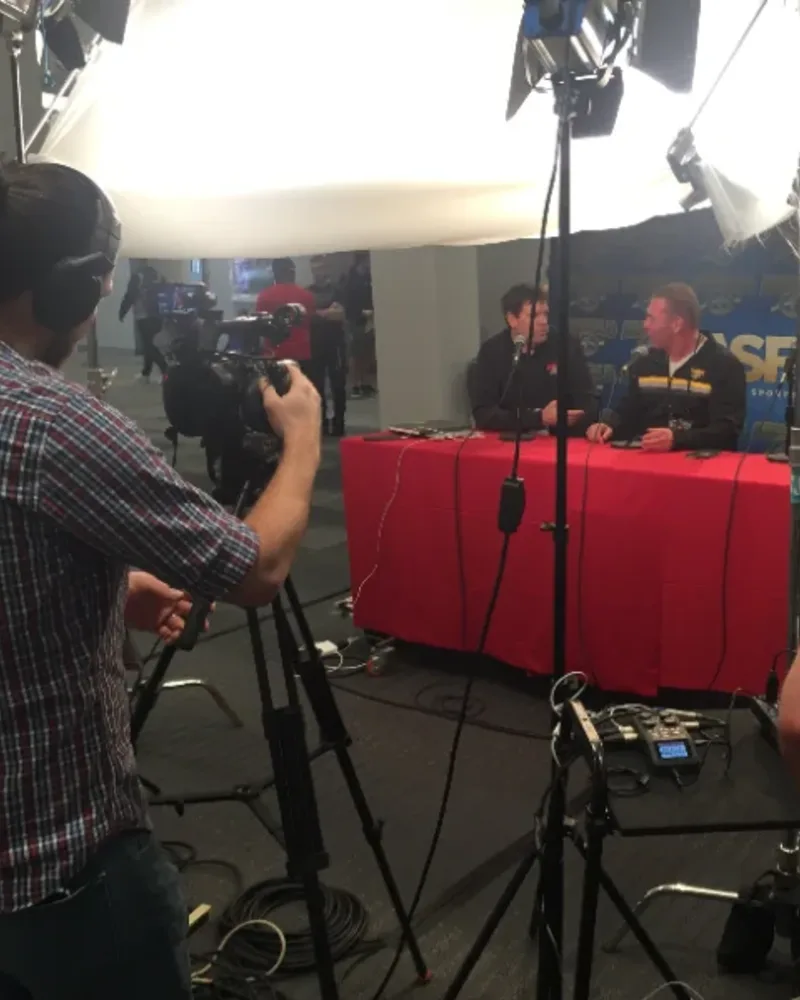
My step into the producer’s shoes came slowly and then very, very quickly. The Arnold Sports Festival is one of the largest events to come to Columbus, Ohio. Annually it brings about 200,000 people to downtown Columbus to see thousands of athletes compete in dozens of events. Stepping into the convention center on that first weekend in March is like stepping into a different world. The throngs of people are impossible to move through, and there is simply no end to it.
I had for several years been tasked with following the big man himself, Arnold Schwarzenegger, around the convention hall as he toured the trade show booths. The crowd would be pushed back by a tight line of security staff in yellow shirts. An aisle of maybe five feet would be cleared, and a small posse of about a dozen people, Arnold in the middle, would walk to predetermined booths. One man’s job was to run ahead and hold up a yellow sign to signal to Arnold where they would be going next.
After our Executive Producer moved to Las Vegas with her new husband, the Creative team was in need of someone to make the production schedule. Between videos to edit and no one else rushing to the task, I offered to build the production schedule that year. That was the slow part, realizing my mistake. The very, very fast part was how quickly it caught up to me. The first version I used with the freelance crews we hired to help film the weekend’s events was terrible and cartoonishly big. As I graduated from video editor to producer to Executive Producer, I improved each year, always finding something I could do better or open up time to film one more amazing feat of strength or agility. Six years later, I was able to reduce the shooting budget by optimizing the shoot enough to drop our typical Sunday pick-up day. With the increased post-production budget, we were able to make some amazing highlight videos that helped promote the festival the following year.
Between the annual ASF video shoots were dozens of others. My favorites were always the groups working with those in need—the nonprofits and other organizations that existed to help those around them. The content I helped produce for Homeport and The Childhood League Center is among my proudest accomplishments. I worked on annual videos for their fundraising galas, each telling stories of the lives changed for the better by Homeport. They were amazing to tell. The Childhood League Center is a Columbus landmark institution and has served the children for decades. When approached to brainstorm ideas for an informative video, I helped lead the Creative team to develop an animated video series starring the Meoples, a group of friendly creatures that dealt with issues similar to those humans face and presented the information in a way so successful that some portions were used in early childhood programs in a few colleges in Ohio.
Into the great wide open...
Mentioning the pandemic feels like a good way to date this piece, so I won’t dwell. It was ultimately more than LIVE! could take on as more and more events had to be canceled to keep the public safe. Sadly, my career ended at LIVE! like many others in the event production industry.
Two years later, as the rest of the world returned to the office, I was eager to return as well. I missed the ability to stop into the edit bay and chat with my editor. Or stop by the graphics team’s desks and check on the progress of some art. I was done with the world of Zoom. I found an office to return to at Improveit Home Remodeling, where I took on the role of Multimedia Specialist—or, as I more frequently introduced myself, “the video guy”—and worked with the marketing team. We created content for trade shows, sales appointments and every possible marketing channel that existed.
Over my time there, I built up a library of a dozen customer video testimonials, recruiting videos for their internal and external sales teams and an intranet page dedicated to the training sessions I had recorded, among other highlights. I’d also started a quarterly webstream, hosted by the Marketing Content Manager, that was done both live and pre-recorded. This gave the teams in all five regional offices the opportunity to hear about updates from the leadership team in Columbus. When I arrived at Improveit, their YouTube page had two videos and the Instagram account had one.
I enjoyed the stories I got to tell at Improveit, but something was missing. Something I’d had at LIVE! and lost prematurely: the unknown. Every morning, as I walked into the Creative Services office, a glass-walled workspace nicknamed “the Fishbowl,” there was the question of who would walk through our door with a request. The Creative Director with updates from a draft we’d sent to a client? One of the half dozen salespeople with a new RFP? An email from a colleague of a client requesting a meeting to discuss a project we’d been recommended for?
I missed producing videos that told challenging stories for fundraising galas. Dreaming up animations to explain the unfilmable with a motion designer. Scrolling a dozen Wikipedia pages as I wrote a script about a topic I’d only just learned existed.
Because I love what I do. The stories I’ve gotten to help tell. The interesting people I’ve met along the way. The in-between moments: turning an idea into action, planning into something real. There’s something wondrous in every second of this work. Meeting new people whose ideas need a little of that magic to become real.
Not sure what your next project needs?
Brainstorming something new? Take this quick interactive survey to spur some ideas. Answer a few questions and it'll point you toward a few content types that fit. Have questions about the results? They also make great conversation starters.
Style Guide
Type
Zilla Slab for headlines
ExtraBold 800 for headlines and numerals · Bold 700 for subheads and links · Medium 500 for accents
Manrope for everything else
Regular 400 for body copy · SemiBold 600 for labels and metadata · Bold 700 for emphasis
Manrope carries every paragraph, label and link—chosen for clarity at small sizes.
Color
Primary marks links and eLearning work. Secondary is the rarer spot color, reserved for video work.
Tone
Plain-spoken, first person, confident without selling. Built around long-term relationships, not a menu of services.